


The Astrology of Submission: Pushya Nakshatra | Losing to Natural Selection | Emotional Inc*st | The Dark Side of Saturnian Structures
- Shicuki

- Apr 26
- 15 min read
This is the 2nd part of the Pushya series. Click here for Part 1.
In this post, we dive into the submissive, “soldier-like” nature of Pushya nakshatra. We will examine emotional incest driven by the selfish pleasures of the matriarch, along with Saturn’s tendency to confine us to a survival-oriented, material state of existence.
We will also briefly discuss the 2nd highest nakshatra in this research, which was Hasta.

As I've discussed in previous posts, in Magha Nakshatra, the emphasis was on mentally visualizing a specific frequency one intends to align with. This stage involves forming a clear internal representation of a desired state or pattern before it is expressed externally.
In Purva Phalguni Nakshatra, this process moves into action. The focus here is on creating tangible changes in the external environment in an attempt to align with the chosen frequency. After the internal visualization established in Magha, Purva Phalguni represents the phase where that alignment is pursued through real, observable shifts in behavior and circumstances.
Since Pushya Nakshatra comes before Magha nakshatra and Purva Phalguni nakshatra, the focus here is on first understanding the concept of frequency itself, including the fact that it can take many different shapes and forms. Despite these variations, there is one consistent principle across all frequencies, which is the presence of a repeating pattern required for a frequency to be established. This repetitive nature is the only common factor, while the specific structure and expression of each frequency can differ.
Identifying Existing Frequencies
Let us begin by examining why many researchers and practitioners who focus on the idea of frequency in a technical sense, often have Pushya Nakshatra.
Carl Jung (Pushya Sun) explored the concept of engaging with recurring psychological patterns, which can be interpreted as shifts in inner frequency.
Louise Hay (Pushya Ascendant) emphasized that mental patterns and beliefs can have different frequencies that influence emotional and physical health.
Dr. Masaru Emoto (Pushya Sun) studied the effects of sound and intention on water molecules. While not directly about astral projection, his work highlights how frequencies and vibrations can alter physical and energetic states, which ties into the impact of sound on consciousness.
David R. Hawkins (Pushya Moon) described consciousness in terms of levels, suggesting that visualization and mental focus can shift a person’s overall frequency toward more coherent states.
Robert Monroe (Pushya Moon), founder of Monroe Institute, developed the Hemi-Sync technology, which uses binaural beats to synchronize brain hemispheres. This method is widely known for assisting in astral projection and out-of-body experiences.
Emmet Fox (Pushya Sun) emphasized the use of mental focus and affirmations to shift one’s inner frequency through repeated thought patterns.
Tom Kenyon (Pushya Moon) is a sound healer and channeler and uses vocal harmonics and specific sound frequencies to guide individuals into expanded states of awareness. His work often incorporates frequencies for deep meditation and spiritual exploration.
Dr. Royal Rife (Pushya Moon) is known for his pioneering work with frequencies in healing, Rife developed the Rife Machine, which uses specific frequencies to target pathogens and stimulate healing. His theories also suggest that frequencies can influence energy fields beyond the physical body.
Suzanne Giesemann (Pushya Sun) is a spiritual teacher and medium, who uses sound and frequencies as part of her meditative practice to, make it easier to connect with higher realms of consciousness.

Across different fields, people with Pushya nakshatra have explored the role of brainwave states and sound frequencies in shaping human perception and physiology.
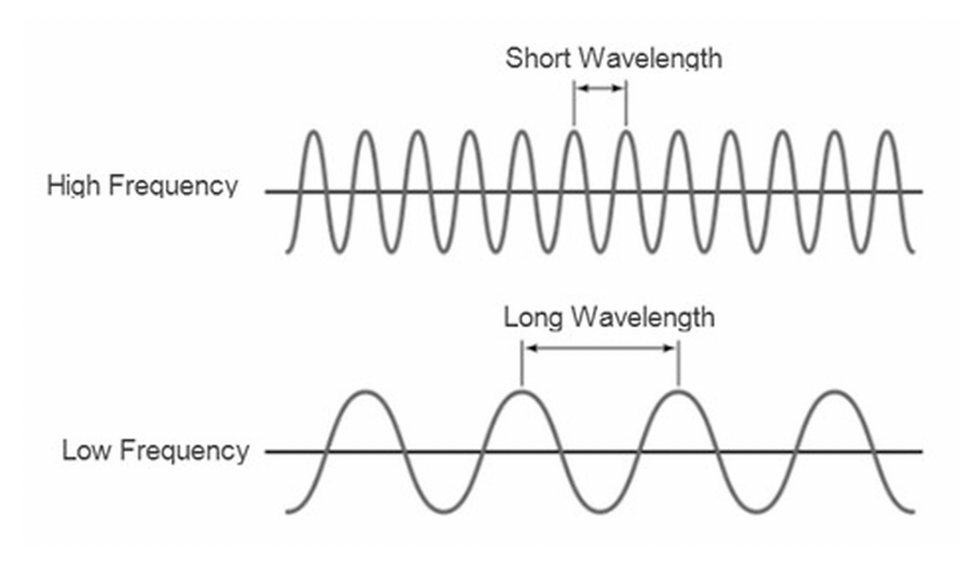
If we consider what a frequency is, it can be understood as the rate at which a wave repeats over time. Frequency is measured in Hertz, which indicates how many cycles occur in 1 second. For example, a frequency of 10 Hz is higher than a frequency of 5 Hz, which means the wave repeats more times within the same duration. In practical terms, a higher frequency corresponds to faster oscillations, where the wave cycles occur more closely together. If represented on a graph, this appears as a repeating pattern where waves of the same size and shape occur continuously, with higher frequencies showing more cycles within the same horizontal span.
Repetition for Discipline
The work of Pushya natives often fixates on the idea of measurable repetition and rhythm, where the same pattern occurs again and again in a consistent and countable way. This establishes the context for understanding frequency as a measurable and observable principle.
Let us understand this with a simple analogy: if there is 1 car and 1 truck, where the car has 4 wheels and the truck has 6 wheels, then
The frequency of vehicles is 2, because there are 2 vehicles
The frequency of cars is 1, because there is 1 car
The frequency of trucks is 1, because there is 1 truck
The frequency of wheels is 10, because there are 10 wheels
So, frequency, in a basic sense, refers to measuring how many times something of the same kind appears.
Saturn itself can be understood as a principle of measurement, particularly in relation to time and scale. Measurement, by definition, involves assessing how much of something occurs within a given frame, such as time, space, or any defined container. Frequency, then, becomes a generalizable tool of measurement, as it indicates how often a particular event or pattern repeats within that frame.
Unless something is done repeatedly over a sufficient number of times, its quality cannot be accurately assessed, nor can mastery be claimed. Doing something once is easy, but doing it 10,000 times is what creates mastery.
In this sense, Saturn represents a system that evaluates output through measurable repetition. When more occurrences take place within a fixed period, it can be described as higher frequency, which may also be interpreted as greater efficiency. Conversely, fewer occurrences within the same period indicate lower frequency and reduced efficiency. This framing allows Saturn to be seen as a regulator that assesses the effectiveness of processes based on observable and repeatable data.
This is also why Saturn is traditionally associated with discipline, accountability, and punctuality. Measurement introduces objectivity, leaving little room for ambiguity or interpretation. It allows outcomes to be evaluated based on what has actually occurred, rather than on intention or projection. In this way, Saturn aligns with the concept of practicality and realism.
Pushya nakshatra, especially, represents Saturn's function primarily as a measure of 'work done', i.e. repetitive output within a defined span of time. It does not determine whether the quality of that output is good or bad, nor does it assess moral or qualitative value.
If two waves are compared, one with a higher frequency and one with a lower frequency, neither is inherently better or worse. The distinction lies only in the number of repetitions within the same duration. The qualitative aspects are governed by other planetary influences, but not Saturn.
This is the difference between productivity and busyness as well. Productivity refers to completing a significant amount of work with precision and quality within a given time, whereas busyness simply refers to performing a large quantity of tasks without necessarily ensuring their quality or impact. This is why Saturn is traditionally linked to the role of a servant in Astrology.
This also helps explain recurring themes such as repetition and attachment to established patterns, including those inherited from early environments or foundational belief systems. When emphasis is placed on repetition alone, there can be a tendency to maintain and reproduce the same patterns without questioning or refining their quality. The 5th house is associated with re-evaluating and breaking away from childhood patterns, whereas the 4th house represents immersion in and attachment to those patterns.
Waveforms
To understand this more precisely, it is useful to examine the structure of stable waveforms and how repetition manifests within them.
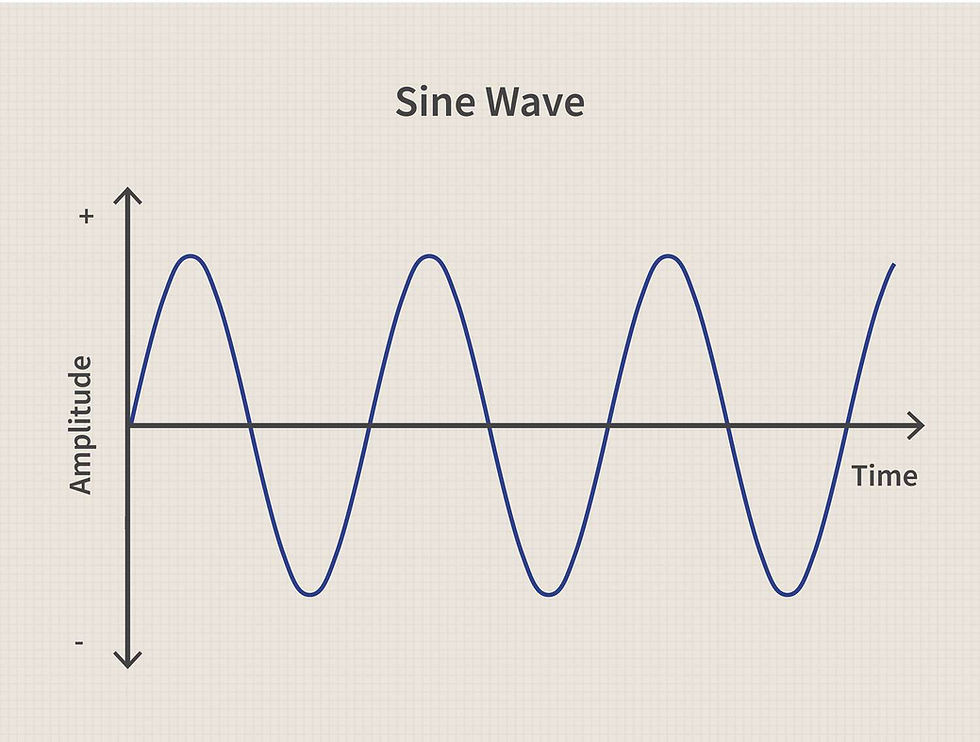
A waveform represents a pattern of variation over time, often used to describe sound, light, or other forms of energy transmission. When the waves within a waveform repeat in a consistent and uniform manner, they form a certain frequency.
When the pattern within a waveform becomes irregular or lacks consistent repetition, it is generally perceived as noise, instead of a distinct signal. A stable and uniform repetition, on the other hand, produces an identifiable frequency. This distinction highlights the importance of consistency in measuring frequency within both physical systems and perceptual experiences.
When a person sings and sustains a musical note, it can be represented as a waveform. Different notes produce different waveforms, but one consistent feature remains: a single note is formed through the repetition of multiple identical waves. The stability of that note depends on the uniformity of each cycle within the waveform.

This provides a clearer way to understand the nature of Saturn. Discipline and mastery, in practical terms, comes from repeating the same action consistently without deviation. It requires predictability and endurance. While expansion in a field may involve new ideas and flexibility, mastery of a specific skill often depends on controlled repetition, where variation is minimized.
However, it would be inaccurate to say that Saturn represents only repetition without quality, because its very function of limitation is what produces refinement and precision. Constraint within clear boundaries, creates definition. This is similar to the act of coloring within lines, where limitation is not restrictive but necessary for accuracy and completion.
For a wave to maintain a stable frequency, it must not only repeat but also adhere to exact limits, knowing when to change direction and maintain consistent amplitude and form. Without such constraints, the pattern would lose coherence. This precise regulation reflects the same principle of limitation producing order, where controlled boundaries allow for consistent and refined expression.
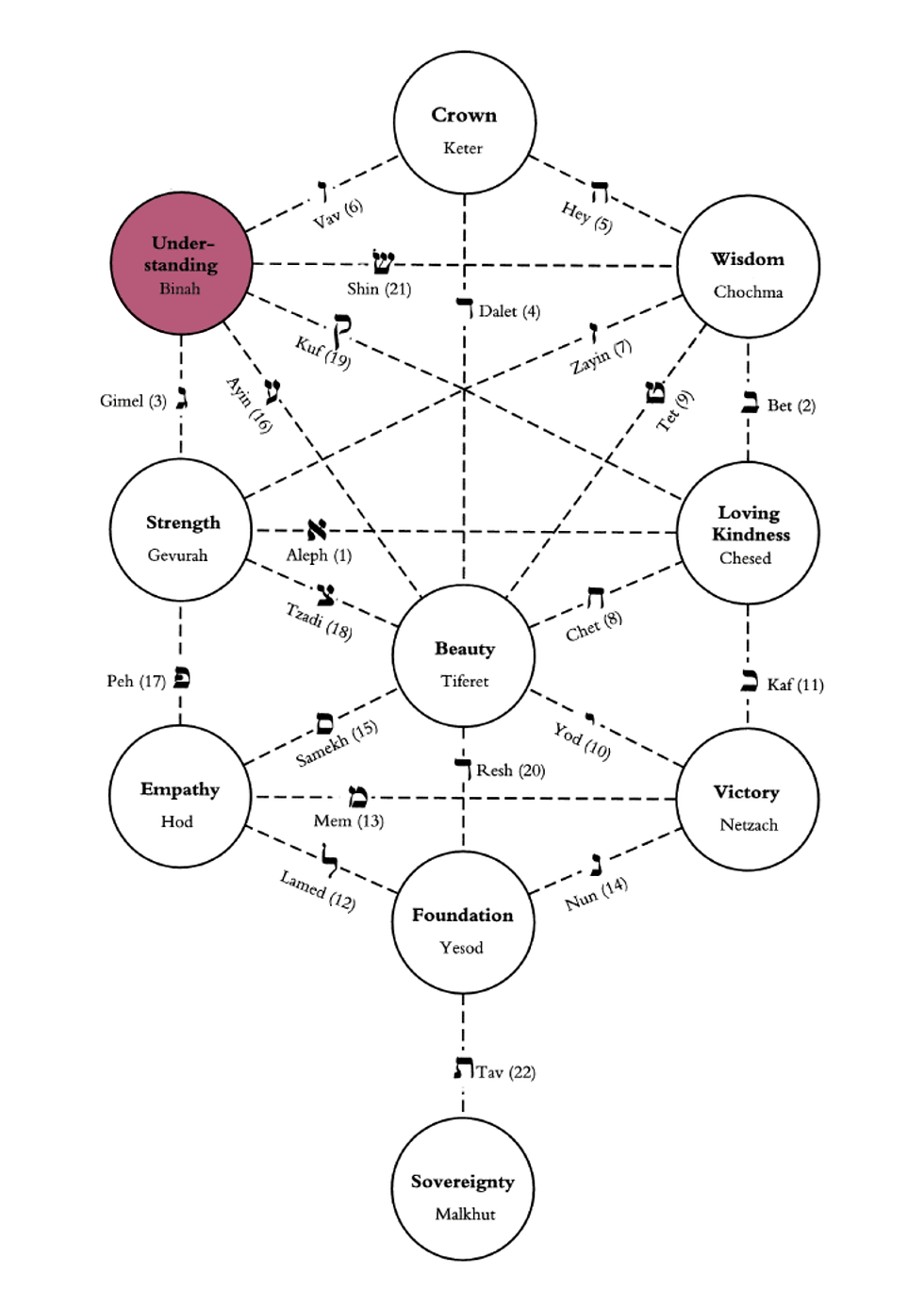
This principle can be related to Binah in Kabbalah, which is associated with Saturn. Binah is positioned on the pillar of severity and is the 3rd sephirah. It is also associated with the “Supernal Mother” or queen archetype, representing the womb-like principle that gives form and containment to creation. Its nature is to define and give structure to what would otherwise remain unformed. Through limitation, it enables clarity and precision.
This principle also explains why patterns must first be understood and objectively measured (4th house), before they can be changed (5th house). The role of Pushya Nakshatra is to refine this ability to maintain a pattern without deviation.
Submissive, 'Soldier-Like' Nature

A comparable example can be seen in the behavior of soldiers. When soldiers march, their movements are synchronized and uniform, with no visible deviation between individuals. This is the distinction between soldiers and rebels. Both may share similar motivations such as being willing to die for a cause, but soldiers operate within fixed rules and maintain uniformity, whereas rebels, well... rebel. In this sense, each wave within a waveform can be compared to a soldier, where uniform repetition is necessary to sustain a coherent and stable frequency.

Some other Indian movies about wars and soldiers starring Pushya actors include:
LOC: Kargil starring Ajay Devgn (Pushya Ascendant) and Sanjay Dutt (Pushya Sun)
Bhuj: The Pride of India starring Ajay Devgn (Pushya Ascendant) and Sanjay Dutt (Pushya Sun)
Tango Charlie starring Ajay Devgn (Pushya Ascendant) and Sanjay Dutt (Pushya Sun)
Tanhaji starring Ajay Devgn (Pushya Ascendant)
Lamhaa starring Sanjay Dutt (Pushya Sun)
Laal Singh Chaddha starring Aamir Khan (Pushya Moon), which was inspired by Forrest Gump starring Tom Hanks (Pushya Moon)
Mangal Pandey: The Rising starring Aamir Khan (Pushya Moon)
Shaurya starring Rahul Bose (Pushya Sun)
One is also required to have a submissive nature and be willing to be a 'cog in the machine' to be a good soldier. It's essentially giving one's body for a greater cause, instead of trying to be a leader or be at the center of things.

This can be understood through the board game Catan, which was invented by Klaus Teuber (Pushya Moon). It involves strategic exchange of resources and territorial expansion, which can be associated with themes of the 4th house of Cancer. Players compete against each other, but early progress depends on exchanging resources and forming temporary cooperation. As the game advances, this cooperation gradually shifts into direct competition for advantage.
Just as men have historically been more associated with the military, for women this archetype may manifest through freely giving maternal support. I discussed in an Instagram reel (left) how Pushya actresses often play surrogate mothers in media. This can be understood as another expression of the same principle of service and giving one's body to a larger purpose.
Hasta Nakshatra Parallels
The top 2 nakshatras in my Incest research in Part 1, Pushya and Hasta, often show a strong willingness to participate in communal structures. For women especially, this may appear as an ease with being part of the “village,” in the sense of willingly taking on sustaining and supportive roles within a larger collective. These are often the figures who remain present in the background, continuously offering care, and practical contribution for the well-being of others. This is also where the 'soldiers, not rebels' concept applies.
I also made a reel discussing how many vintage Bollywood actresses were associated with Hasta Nakshatra along with a few other Moon nakshatras (right). In the caption, I explained that in the 50s and 60s, following India’s independence, there was a strong cultural shift toward conservatism. There was hesitation around accepting new ideas or foreign influence, largely shaped by the belief that openness to external forces had contributed to colonization. As a result, there was a collective movement toward preserving what was seen as “traditional” values, often emphasizing modesty, restraint, and continuity.
However, what was considered traditional during this period was not entirely rooted in pre-independence practices. Many of these norms were influenced by colonial-era standards, particularly in relation to modesty and presentation. For example, the styling of the saree evolved to include blouses and more covered forms, which were later perceived as traditional despite being shaped by colonial influence. This reflects a broader pattern where “tradition” itself is not fixed, but continuously redefined over time.
Hasta Nakshatra, especially in female representation, came to reflect an archetype centered around modesty, servitude, and maternal identity. The emphasis was on the selfless, giving feminine figure, often aligned with the ideal of the devoted wife or nurturing mother, where personal expression and sensuality were minimized in favor of duty and care.
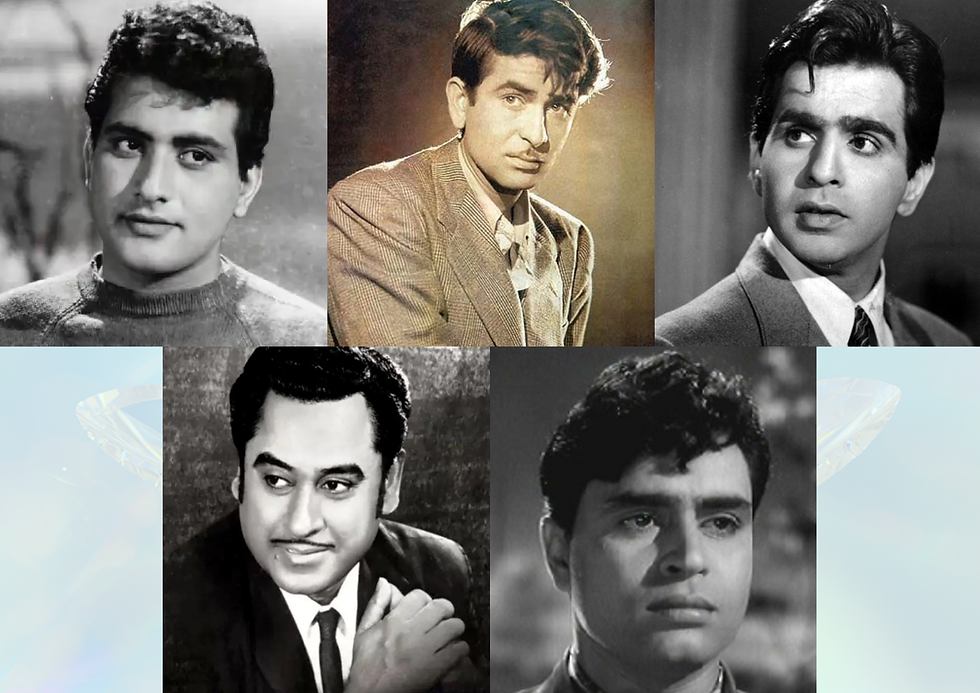
An additional observation, not previously highlighted, is that while Hasta was prominent among actresses, Pushya was one of the top nakshatras for male actors of the same era. Together, these patterns suggest that both Hasta and Pushya were culturally reinforced during this time, aligning with broader post-independence values that emphasized patriotism, modesty, service, and a reduced openness to external influence.
Hasta Nakshatra is located in the sign of Virgo. If we look at this additional graph (below), Virgo stands out as the top sign for the Sun, Moon, and Ascendant combined, in the incest research.

As discussed in Part 1, among the bottom three nakshatras in this research, two are Sun-ruled nakshatras, Krittika and Uttara Ashadha. This is important because Uttara Phalguni, the third Sun-ruled nakshatra, falls largely within Virgo. This likely explains why it was the only Sun nakshatra that did not rank among the lowest in this observation.

The natural 6th House of Virgo is associated with the expenditure of energy through conditions such as enemies and obstacles. It represents situations where energy is discharged in response to difficulty. In this sense, both the 4th House and the 6th House can be understood as limiting or testing. In contrast to the more abundant nature of the 5th and 7th Houses, which are associated with romantic union, the 4th and 6th Houses often function as areas of 'containment'.
These two houses can also be viewed through distinct feminine archetypes. The 4th House, associated with Cancer, reflects the maternal archetype, centered on nurturing and not being viewed as sexual. The 6th House, associated with Virgo, reflects the maiden or virgin archetype, characterized by modesty. Both archetypes, in their isolated forms are more 'giving', palatable forms of femininity, as compared to more jarring, sexualized lover or wife.
Similarly, the maiden archetype of the 6th House, often reflected in the modest and service-oriented figure, emphasizes discipline and restraint. This archetype, like the maternal one in isolation, can be antithetical to sexual or romantic expression, as well as to the dynamics of attraction and reproduction. In both cases, the emphasis is on maintaining order and continuity rather than engaging in transformative or expansive union.
Emotional Incest for the Mother's Pleasure
Vintage Bollywood films also used to emphasize the controlling mother archetype in relational dynamics, where the man prioritizes his mother’s opinions and desires above those of his wife, and the wife is expected to accept this structure. This is an attempt to appear morally superior through self-sacrifice, where the woman aligns more with the maternal role than with the wife or lover archetype.
The dynamic is not even centered on the man’s independent choices, but on his continued alignment with the mother’s authority. He is often depicted as unwilling to go against his mother's wishes regardless of his own desires. The wife’s sacrifice is not directed toward the husband as an equal partner, but toward maintaining the maternal hierarchy. This establishes a pattern of emotional dependency and codependence, where the mother-son bond becomes possessive and exclusionary.
This can manifest as emotional incest, where the mother or sister may exhibit possessiveness when the man directs attention or care toward his wife, creating tension and competition. The wife, in turn, may internalize this structure, suppressing her own desires with the expectation that fulfillment will come later through her own children, particularly the son, thereby continuing the cycle.
These patterns are also often associated with Pushya and Hasta nakshatras, where maternal alignment can override individual expression. In such frameworks, it may not even occur to the woman that her partner can or should fulfill her emotional or physical needs.
This dynamic is antithetical to the process of individuation. On the spiritual path, one must symbolically separate from the parental structure. This also aligns with the 5th house and the concept of developing a self-directed center, where one’s actions are not governed by inherited patterns or external approval.
Saturn Devours his Offsprings
In Roman mythology, derived from Greek mythology, Saturn, identified with Cronus, is said to have consumed his own children to prevent a prophecy that one of them would overthrow him. This act reflects a frenzied and visceral image of destruction, where the body itself becomes the site of control, torn apart in an attempt to preserve power. It also illustrates an extreme Saturnian tendency toward control, where the system sustains itself by suppressing or even terminating its own lineage to avoid risking loss of authority.
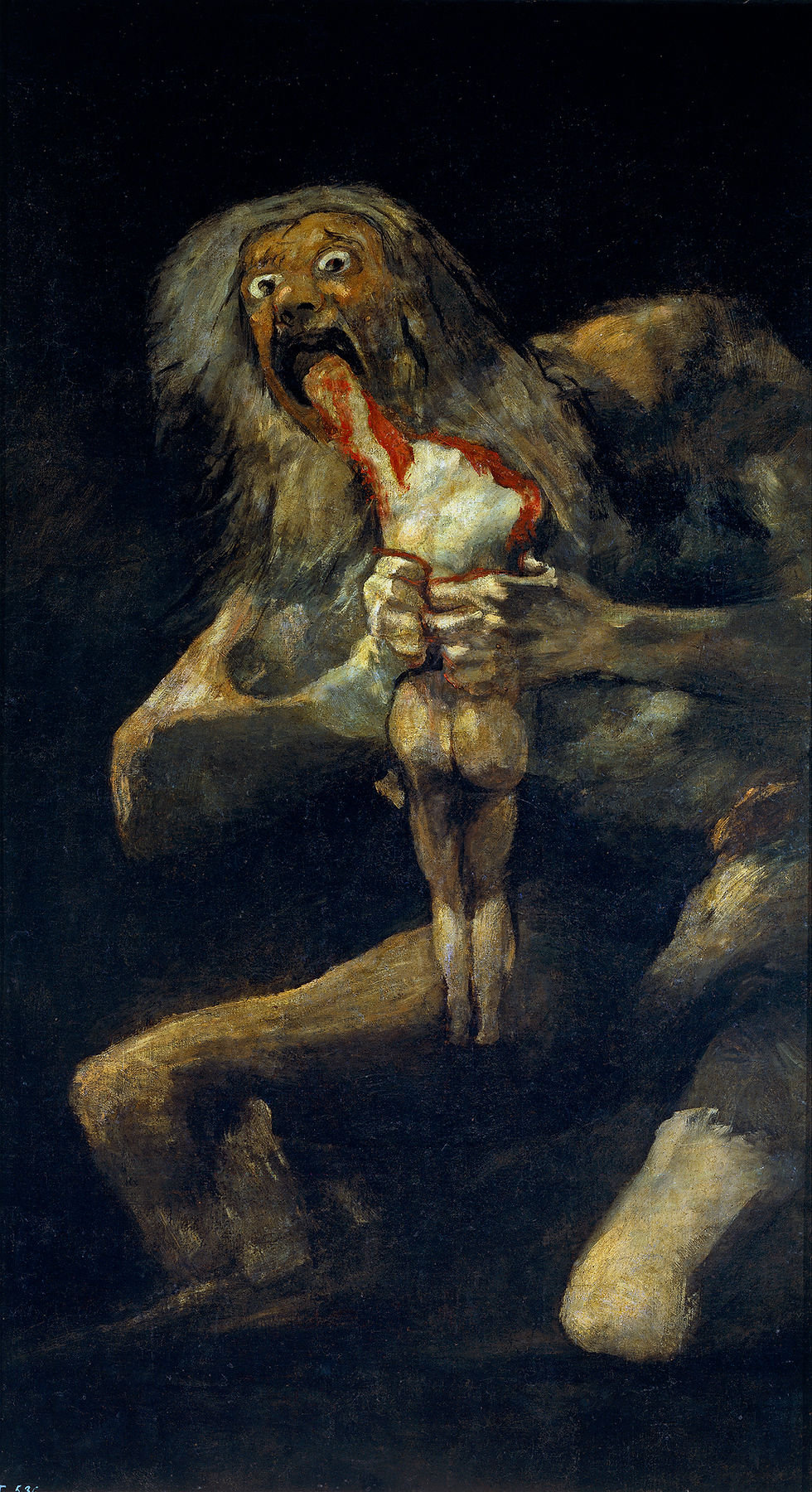
In the painting Saturn Devouring His Son by Francisco Goya, who has another Saturn nakshatra (Uttara Bhadrapada Sun), the head of the child is already missing, indicating that it has been consumed first. Symbolically, the head represents awareness and higher cognition, so its removal suggests the immediate destruction of individuality and consciousness. This emphasizes the idea that control, in its most extreme Saturnian form, eliminates the very center of perception and selfhood.
This painting also represents Saturn’s association with practicality and keeping things 'realistic'. Saturn has an intensely grounded, material orientation. This realism can also become pessimism, especially since breaking destructive patterns requires hope, or the ability to envision something beyond the present structure. The removal of the head while the body remains can be read symbolically as a fixation on the physical reality. It suggests a state where consciousness is cut off from expansion, leaving only the material, repetitive aspect of existence, resulting in a kind of tunnel vision where one is confined to immediate survival or routine.
One theme that becomes clear with Pushya Nakshatra is repetition and copying. A biological parallel to this can be seen in mitochondrial DNA, which is inherited exclusively through the maternal line.
Mitochondrial DNA is passed from a mother to all her children, both sons and daughters, and is copied with very little change across generations. However, only daughters continue this lineage, because sons do not pass their mitochondrial DNA to their offspring. In this sense, the mitochondrial line continues only through women, making it a purely maternal chain of inheritance.
This reflects a form of continuity that remains unaffected by paternal contribution, since the mitochondrial DNA in each generation comes solely from the mother, regardless of the father involved. This direct and repetitive transmission aligns with themes of matriarchal continuity and pattern preservation associated with Pushya.
We will explore this further, including asexual reproduction and purely maternal lineages, in the next part of this series.
Losing to Natural Selection | Autopilot Mode
As mentioned earlier, Magha Nakshatra represents the stage of visualizing a new reality for oneself, while Purva Phalguni Nakshatra represents actively pursuing that reality. In contrast, Pushya Nakshatra in the 4th house, reflects a stage of being embedded in existing childhood patterns.
At this stage, there is often no awareness or desire to change limiting or destructive patterns. Life is lived on a form of autopilot, where repetition continues without questioning. This can be compared to mother nature, and how in an uncontrolled environment, such as a jungle, a lack of awareness or preparation leads to being overpowered by surrounding forces. Similarly, when people remain unconscious of their patterns, they are shaped and limited by them.
This is reflected in common beliefs about life circumstances. Many people assume that their conditions, such as family background, financial status, or early education, permanently define their trajectory. However, this assumption itself is part of the pattern. The system sustains itself unless actively interrupted. This can also be observed in certain narrative patterns in media, particularly those involving strong parental or matriarchal dominance.
In The Cement Garden starring Charlotte Gainsbourg (Pushya Sun), the mother is intentionally unnamed, functioning more as an archetypal presence than a fully individualized character. Her influence is expressed through emotional dependence, fragility, and a closed domestic environment where the children remain centered around her needs. Even after her death, this influence persists, as the children conceal her body and continue living within the same confined structure, reflecting an inability to separate from the maternal system. This sustained enclosure and lack of external grounding contributes to Julie’s (Gainsbourg's character) behavior, where boundaries dissolve and incest takes places as an extension of the same contained, self-referential family dynamic.

Other movies where incest occurs due to the mother's influence include:
The Falling starring Joe Cole (Pushya Moon)
Game of Thrones starring Nikolaj Coster-Waldau (Pushya Sun)
The Borgias starring Holliday Grainger (Pushya Moon)
Yellow starring Heather Wahlquist (Pushya Moon)
The Sweet Hereafter starring Tom McCamus (Pushya Sun)
Ma Mère starring Louis Garrel (Pushya Moon)
In some films, this appears in extreme forms such as incest, but in others, it appears more subtly as continuity of lineage and inherited structures. For example, in Mamma Mia!, Meryl Streep’s character exhibits resistance toward her daughter’s desire for marriage, as she herself believes in the idea of 'exploration'. In Part 2 of the movie, Mamma Mia! Here We Go Again, the daughter extends the same lineage by maintaining and developing the villa established by her mother.
Originally, I intended this series to be limited to 2 parts, but as I kept exploring and putting this together, I realized there was a lot more I wanted to share. So, the Pushya Nakshatra series will now be expanded into 3 parts.
The 3rd part will explore in-depth aspects including the occult nature of Pushya, parallels in Gnosticism, etc. It will also examine themes such as asexual reproduction and closed lineage patterns observed in certain elite or royal family structures.
This final part will focus on the most detailed and layered interpretations, presenting the deeper underlying mechanisms associated with Pushya, so stay tuned! 🪷
![Pushya Nakshatra [Part 3]: The Motherline](https://static.wixstatic.com/media/5640f3_c9e4be1f3ad54e74836bc414cab55763~mv2.png/v1/fill/w_980,h_1386,al_c,q_90,usm_0.66_1.00_0.01,enc_avif,quality_auto/5640f3_c9e4be1f3ad54e74836bc414cab55763~mv2.png)

Comments